


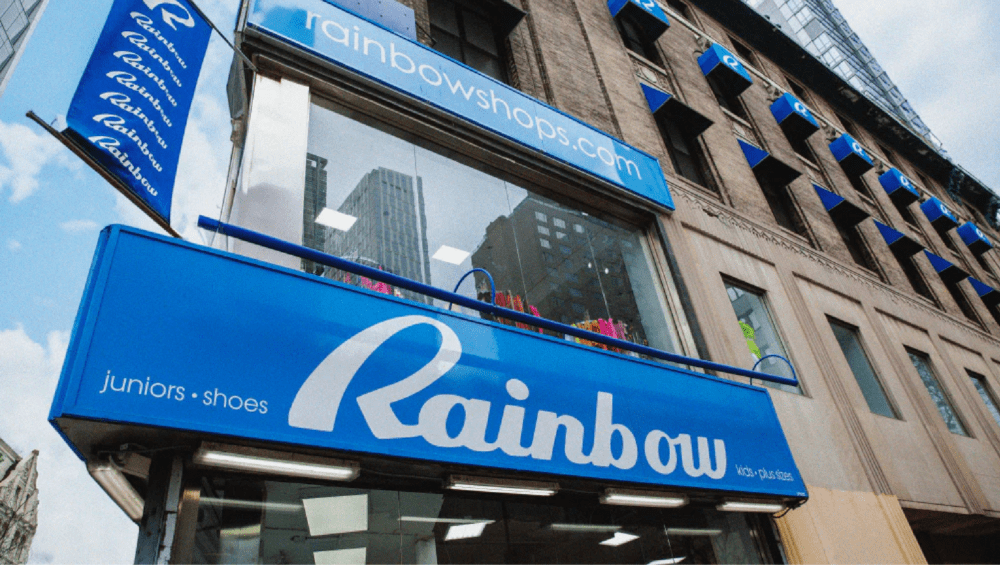
Rainbow Shops is an independent retailer with a team of just three full-time engineers — and yet they manage to stay competitive with the goliaths of commerce, including Amazon, Walmart, and Shein.
But it wasn’t always this way.
After about a decade on Demandware (now Salesforce Commerce Cloud after a 2016 acquisition), David Cost, Rainbow’s vice president of digital and e-commerce, knew they had to make a change, or risk getting left behind.
Since making the switch to Shopify, Rainbow has:
- Experienced an 80% reduction in platform fees.
- Launched native apps that were previously cost-prohibitive and lacking in functionality. They’ve since seen those apps account for 20% of their customer interactions.
- Seen site search volume increase by 48% after implementing Shopify’s integration with Google Cloud’s Discovery AI solutions.
- Shipped numerous new features in minutes vs. months.
Rainbow Shops: Affordable fashion and a substantial online presence
Rainbow Shops sells affordable, trendy fashion like size-inclusive clothing, shoes, and accessories for women, men, and kids.
Founded in New York in 1935, Rainbow Shops has since grown to over a thousand stores in the United States, with their online store as the largest one in the chain. Unlike their behemoth competitors, Rainbow is focused purely on fashion, creating bespoke shopping experiences that don’t feel like “shopping in a warehouse.”
“They can come into the store and go on a treasure hunt,” says Cost. “They can experience retail as entertainment.”
That makes for an experience that’s unique to the brand — and one that keeps customers coming back. It’s also an approach that has required creative thinking. The team outmaneuvers their competitors by moving and innovating faster — both in person and online.
Doing that requires a technology partner that can do the same. But that’s not always the partner the Rainbow team had.
The challenge: Technology was holding Rainbow back from keeping pace with the competition
When you compete every day against brands like Amazon, Walmart, and Shein, each of whom has thousands of engineers, the technology partner you choose is critical.
In order to innovate and not get left behind, you need a platform that’s cutting edge. Initially, Rainbow turned to Demandware as their innovation partner. At the beginning, there was a lot of innovation to be found. But soon, it was clear Shopify was where the locus of technological innovation had shifted.
“Everything new and innovative came out on Demandware first, but there came a point where that clearly shifted to Shopify. Today Shopify is the clear winner,” says Cost.
He knew they needed to make the switch — but first, he’d have to tackle the daunting idea of replatforming.
“Replatforming decisions are really hard,” he says. “People in my position lose their jobs when replatforming projects don’t go well.”
However, the best tech talent wants to build new things, and they want to do it on the leading platform. They don’t want to be stuck on an outdated technology or one that’s in decline. That’s why when Cost started socializing the idea of switching to Shopify, he found that his developers were excited and supportive of the move.
Aside from developer enthusiasm, he also had to make the business case that the overall benefits would outweigh the risks — and there are a lot of risks to any replatforming decision.
After thorough vetting though, Cost says he and his peers “knew that the reward was going to be worth it.”
Continue reading to see how Rainbow Shops resolved these issues.